Work Text:
On The Origins Of The Races Of Arda
According to Astaria Everlasting's Fan-Canon Of Middle Earth
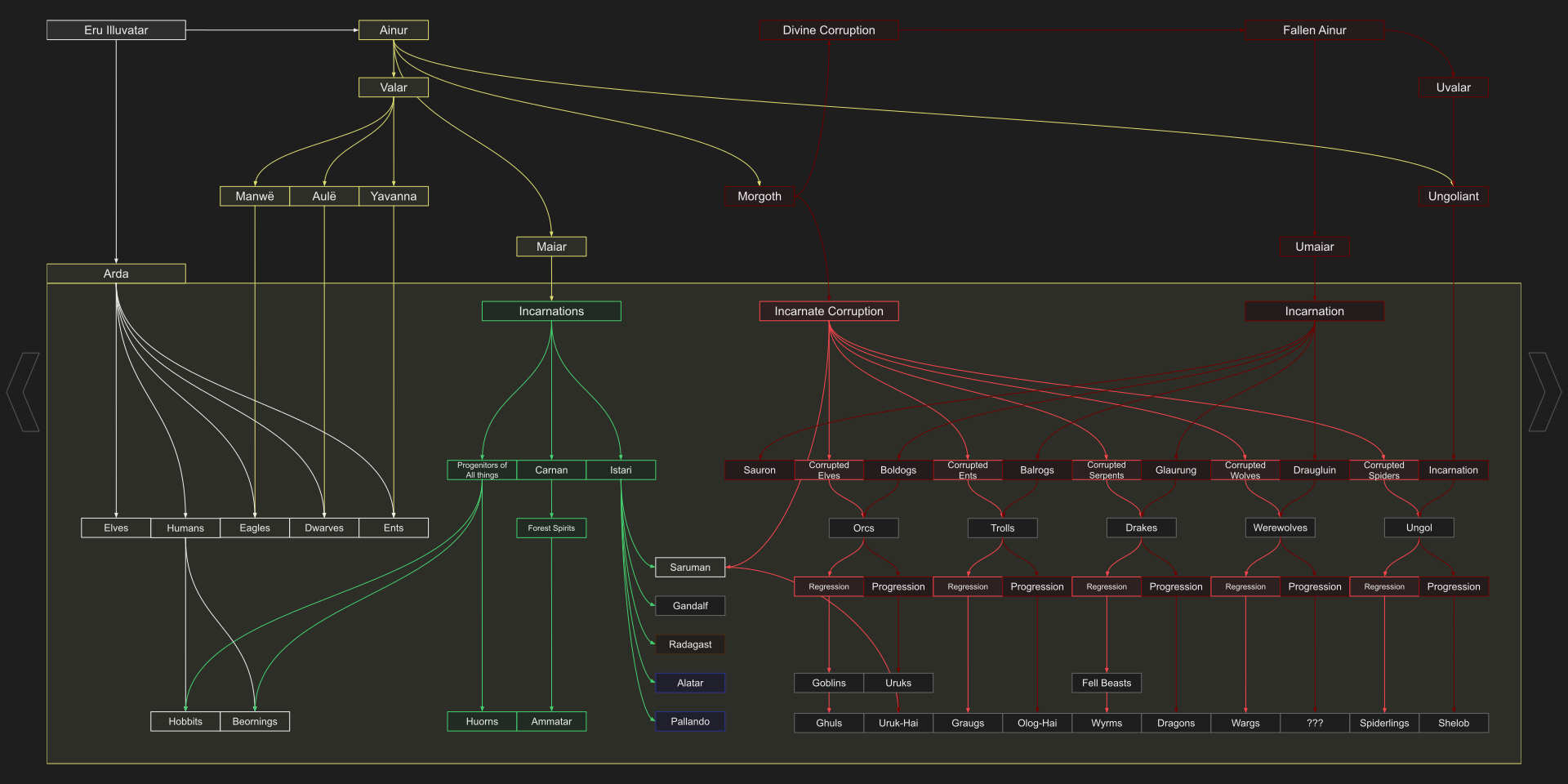
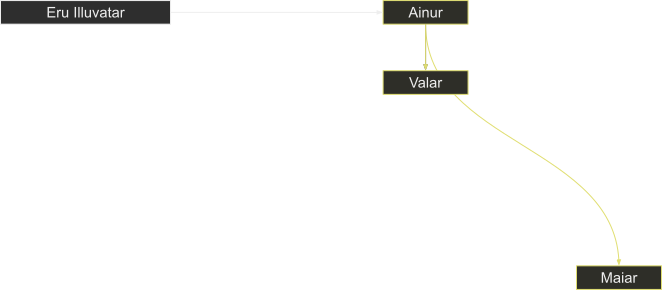
In the beginning is Eru Illuvatar. He is the supreme being of all, the single creator of all existence; however he created and delegated much decision-making to his first creations: The Ainur.

The Ainur consists of two levels of divine entities:
- The Valar - Higher Divine Spirit Beings
- The Maiar - Lower Divine Spirit Beings
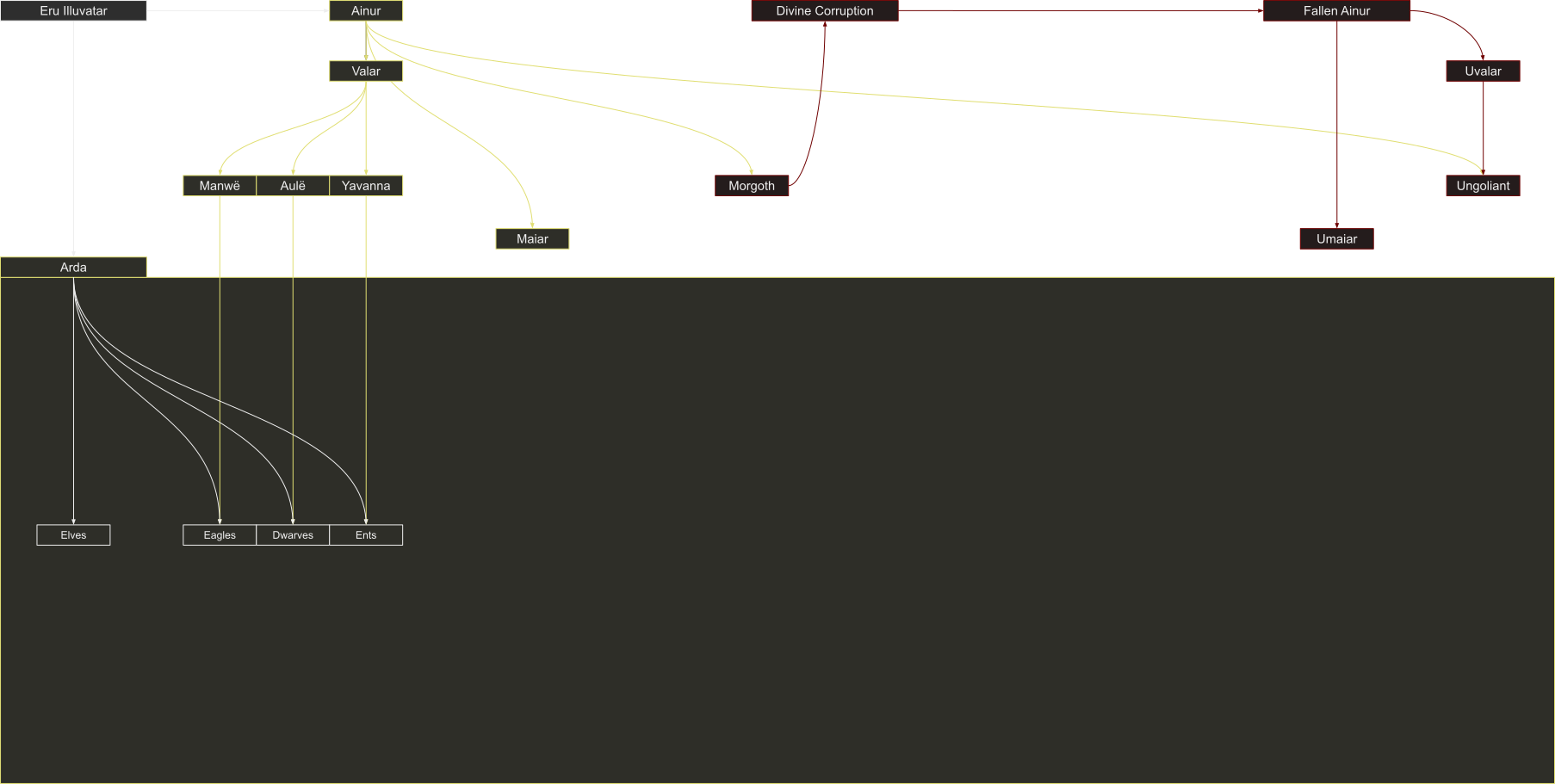
The Valar are among the more well-known figures of the origin of Arda, numbering a strict and elite few, with many of which being named, such as Manwë, Aulë, Yavanna, Melkor (Morgoth), and for the purposes of this theory, I have included Ungoliant in this classification, not because she is a confirmed Vala, but because she was shown to have the power to be able to contend with Melkor who was classified as a Vala. Of course, there were other Valar, but for brevity, I will only be talking about those whom I have need of for incorporating into the origins of others in this theory.
As for the Maiar, they are unnumbered, presumably vastly varied, and few are outright named, but I will address this at a later point.

For the moment, we need to focus on Melkor, whom I will refer to as Morgoth from this point forward. We know that he was the one who introduced discord in the music of creation. His desire to alter Eru's song to his desires was the first instance and starting point of "Divine Corruption" or corruption within the state of being divine/corruption to an entity which is in a spirit state. Morgoth was responsible for sowing this Divine Corruption among the spirits, including to members of the Ainur, including as previously mentioned, Ungoliant, and other Maiar, who allowed Morgoth's corruption to take root in their spiritual forms.

Now the stage is set, and through Eru Illuvatar's will, Arda was brought into being. Please note, that though not all of this essay will be in chronological order, the broader swaths will benefit from starting at this point in the legendarium. There will be reference to timeframes or major events, but they may not be strictly in order.
Eru Illuvatar is the only being, even among his self-created Ainur, who had the ability to create wholly new life, using the Flame Imperishable, the Secret Fire, which gives existence to independent, sentient beings, with fëar or souls. And following the perhaps-metaphorical terminology of a "flame" I consider souls to be little sparks or flames unto themselves. So it was the little flames of fëar, the original gift of Eru, a blessing of inheritance, would pass from parent to child and enduring through generations until the embers, unless maintained, might wane and fade to ash; a consequence like the fading of the magic of Arda caused by Morgoth's original discord and corruption during the song of creation. But let's set that concept of fading fëar aside for the moment as well.
So, using the Flame Imperishable, Eru's first creation would be the elves, and within them burned their fëar; the creation of which sparked inspiration into a number of His servants among the Valar who wished to create their own entities within Arda:
- Manwë created the Great Eagles, giant, intelligent birds of prey.
- Aulë created Dwarves, clockwork-like people with human-like features, and a knack for mining and forging.
- Yavanna created Ents, beings that look like trees which have grown legs and act as "shepherds of the forest."
- Morgoth created mockeries of the elves, made of slime, mud, and other foul things.
However, without Eru's approval, these new species and races could only ever be puppets, like playthings for the Valar, which would cease to function if their creators abandoned them. This is an important concept, as it was the determining factor of what would later set Morgoth's plots in motion, so let's stick a pin in that.
Because Eru determined sincerity in the hearts of his Valar, he did grant true life to a number of their creations. (In my fanon, I do deviate here from Tolkien, in that even animals may be granted souls, you are free to disagree). However, in Morgoth's heart, Eru sensed resentment, deception, domination, and malice, so never did He grant Morgoth's creations true life, but that would not be the last seen of them.
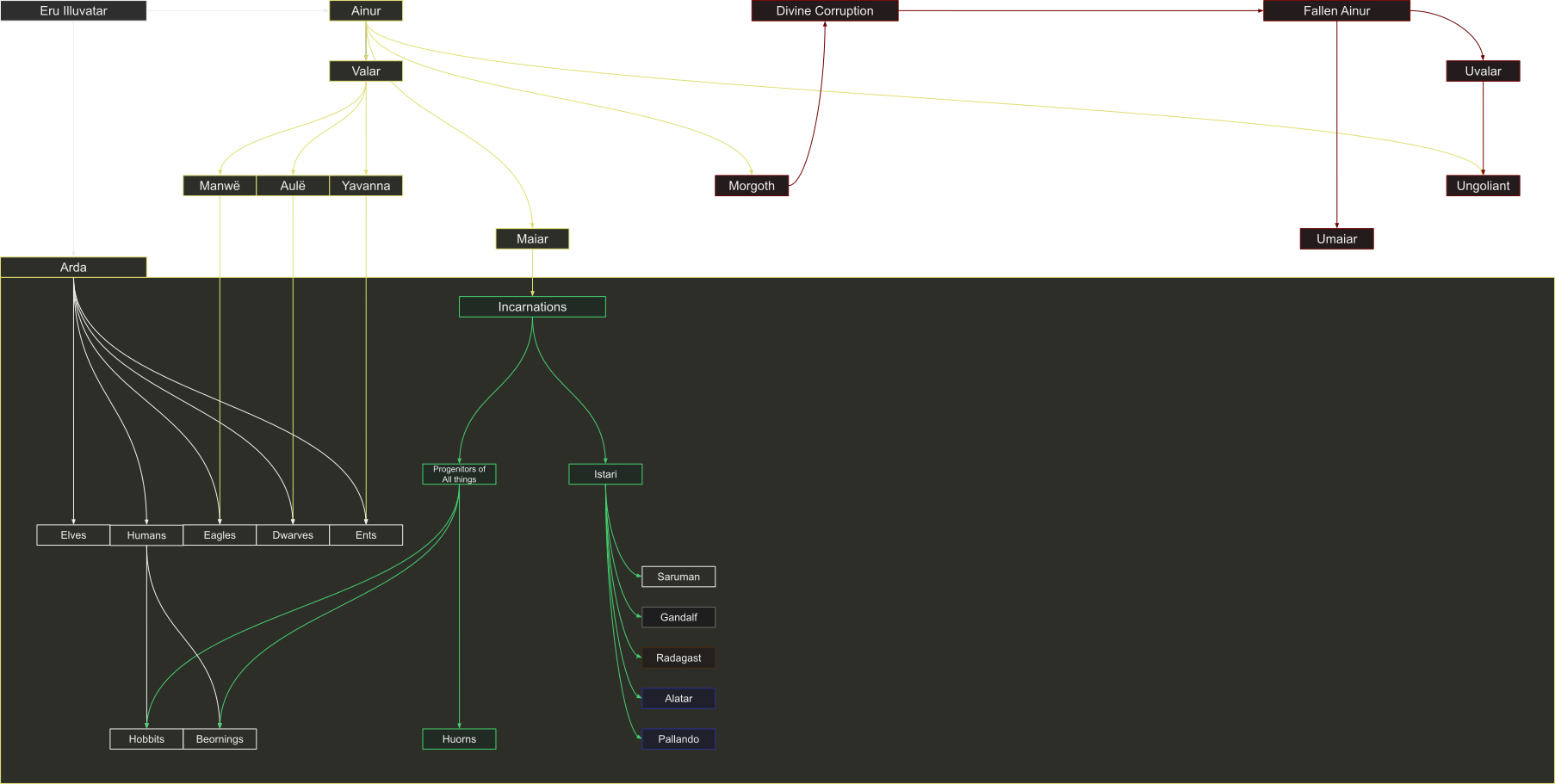
Aside from the Valar's sanctioned creations, many of the Ainur spirits also found inspiration in Eru's creation and Arda, and sought to condescend into the world to play a part of it. Eru permitted their request, and thus many incarnated into physical forms. Rather than creating life from nothing, they discovered they could take forms wholly unique or nigh-indistinguishably similar to that of Eru's other creations.
Examples of this include the five wizards also known as The Istari, a group of five Maiar, incarnated into human-like forms, though retaining a degree of their divine powers, and tasked by Eru to act as guides to the people of Middle Earth:
- Saruman - The White Wizard
- Gandalf - The Gray Wizard
- Radagast - The Brown Wizard
- Alatar - One of the Blue Wizards
- Pallando - One of the Blue Wizards
The Ainur's ability to incarnate came with physical forms composed of divine, adaptable, genetic material, enabling them to interspeciate: the ability to meld with any animal or plant to create new branches, sprouting new species, subspecies, and races; or the mixing of different species often resulting in new forms of life from already existing entities with the purpose of populating all corners of Arda with life suited to each biological niche. These new forms could be all sorts of strange and wonderous and wild things, such as:
- Huorns, trees with the creature-like ability to creep and move
- Animals with souls with the capacity to think, speak, and reason.
Now, we reach Humans, which need little explanation, being the second children created of Eru Himself, and untethered from the fate of the world, despite their fëar burning within, sparing them the same fate as their elven siblings. But humans also branched into many lineages, likely originating from Ainur incarnates, loyal to Eru, who wished to enter and experience Middle Earth, even going so far as to fall in love with and procreating with his mortal children. In doing so, incarnate Valar and Maiar may pass on preternatural traits to their offspring and lineages which were of personal significance to the individual Vala or Maia's spirit, thereby possibly creating new breeds of a particular race. Among such races, you may recognize the likes of:
- Hobbits, small humans, with hairy feet, a strange talent for moving unseen, hiding in plain sight, going unnoticed among larger folk; masters of the art of disappearing.
- Beornings, large humans, who have mastered a strain of magic that allows them to transform into animal form.
It is important to note that if a lineage, at any time in the past, included an incarnate Valar or Maiar, due to their genetic adaptability, it is possible for interspeciation to occur among those races that differ in forms, natures, and methods of physical reproduction. As such, according to Eru's intent for Arda, such bloodlines should not stray from their like-kinds; broadly meaning things like pollen producers should not breed with egg-layers should not breed with live birthers, etc. However, it could also have been a rule more narrow in scope as well, such as cats should not breed with dogs should not breed with cattle, etc. This rule being a protective measure, was intended to prevent the creation of cruel, twisted, physical forms which would only cause their bearer undue harm or unnecessary death.
Creating blended creatures which belonged to no singular, true lineage, was one of Morgoth's (and later Sauron's, and Saruman's) greatest sins against Eru. So, now we get into the crux of it.
At first, before anything, Morgoth relied heavily on his puppet creations, made of mud and slime, to do his bidding and fight his wars. These were essentially proto-orcs, derivations of the elven form, malformed, and controlled by their creator, soulless, will-less puppets. He had no ability to give them autonomy to act in his stead, he had to control their every move, their every action, and that was the ultimate weakness limiting his quest for dominion over all of Arda. And so he plotted, and through trial and error, testing the boundaries of Eru's laws to their breaking points, he began to build his armies.
First, seeking those he corrupted among the Ainur, now called Uvalar and Umaiar, they too condescended into Arda and incarnated into physical forms to serve their master, without the blessing of Eru and without adhering to Eru's designs, among them beings emerged such as:
- Sauron, Morgoth's second in command.
- Boldogs, mimicking Morgoths proto-orcs in form.
- Balrogs, great commanders and warriors of flame and shadow.
- Glaurung, a mighty giant drake with a poisonous, silver tongue.
- Draugluin, a terrifying wolf-like beast.
- Ungoliant, a giant, light-devouring spider.
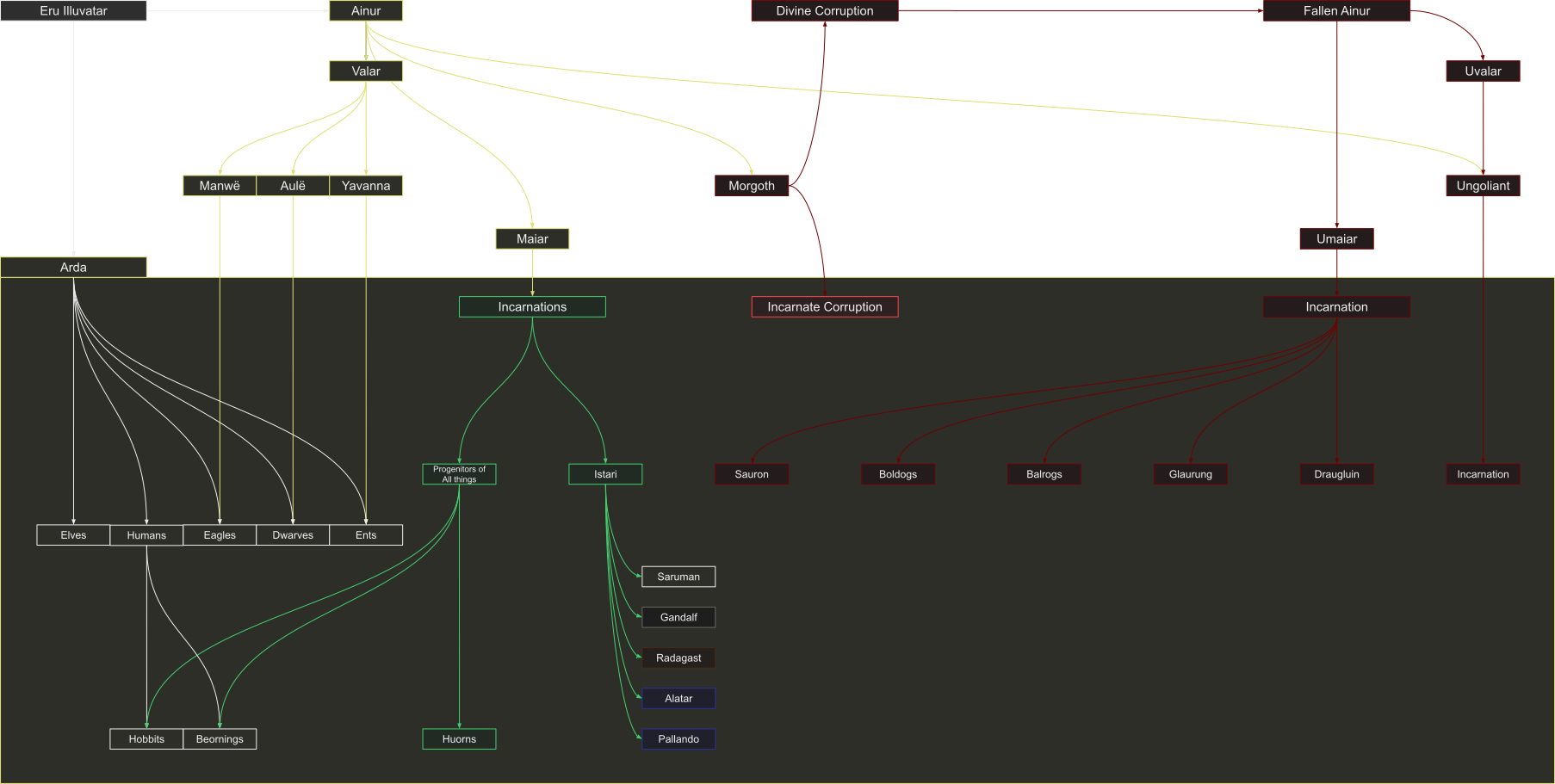
Next, came the capture of those among Eru's own creatures and creations, with the purpose to steal the capacity to create new life without Eru's secret fire. He forcibly introduced physical or "Incarnate Corruption" upon these captives, through means of beguiling, bribery, manipulation, brainwashing, abuse, and torture. Under Morgoth's command, his servants bred with captives, bringing forth the wretched broods of his corrupted designs.
- Boldogs, numbering many, bred with captive elves, creating the first true orcs, who were so degenerate, what was left of their elvish nature reviled light, lest it expose and reveal their corruption to Eru.
- Balrogs bred with captive ents, creating the first true trolls, whose conflicting origins of fire and nature made them vulnerable to sunlight turning them into stone.
- Glaurung bred with many serpents, creating further wingless drakes, which would later be further interbred to create winged dragons (but put a pin in that to be discussed later).
- Draugluin bred with numerous wolves, creating strange intelligent beasts known as werewolves.
- Ungoliant bred with countless hordes of spiders, creating the ungol breed of spiders.
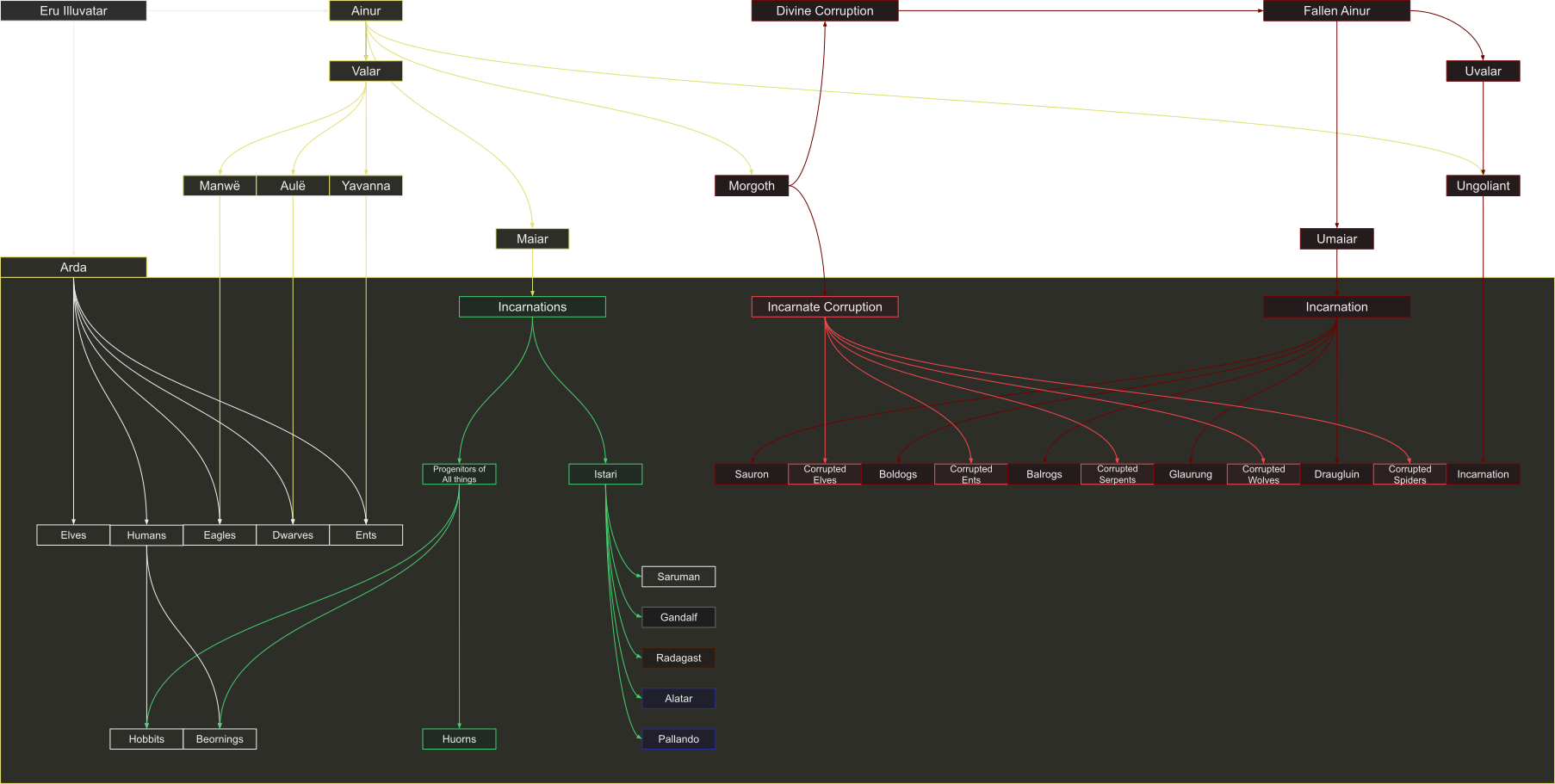
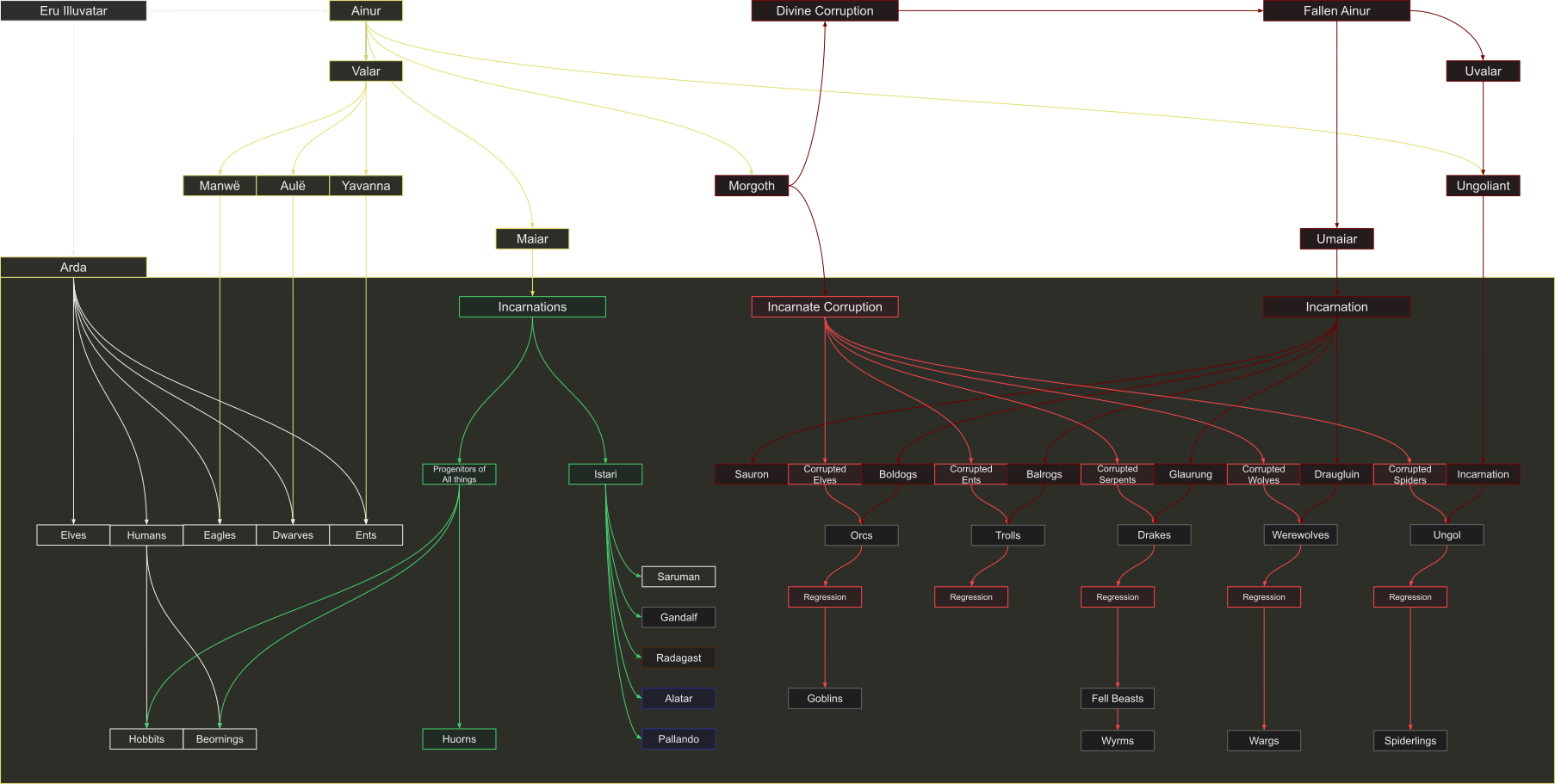
As the centuries of Morgoth's reign went on, surely he experimented with countless other combinations and creations, ripped from Eru's designs, all in mockery. But not all were viable and untold numbers of mutant beasts were lost in his accursed machinations. Through theses tests, it was found that too much contribution from his corrupted, incarnate umaiar servants created a problem, likely stemming from their adaptable genetics which had allowed his bastard creations in the first place; for mixing the same nebulous material over and over caused a change reaction called Regression. Without the sound structure of genetic design provided by using breeding subjects from Eru's creations, Regression, in extreme cases, could cause the intended creation to emerge as little more than putrescent essence. Morgoth found the solution to this problem was to keep a balance of how much of Eru's creations contributed versus his own servants, but even after striking that balance, Regression's other complication was the component of time.
For it was after Morgoth's fall, where his armies scattered across Arda, forming small roving bands among themselves for survival, in which the issue would emerge again. It was slower without the incarnate Umaiar's direct involvement, but unavoidable nonetheless as they hid away, isolated among themselves, that inbreeding caused Regression to emerge again.
- In orcs, Regression resulted in further bowed and hunched posture, smaller bodies, larger ears and eyes, thinner limbs, and longer teeth and claws; a smaller, more wild subrace of orcs, colloquially known as goblins.
- In dragons, Regression resulted in less intelligent, but more subservient mockeries of dragons, deformed serpentine creatures, with ruined hides and wings; creatures known as fell beasts. As well as a different branch from the wingless drakes which would become limbless, grossly overgrown, bloated monsters devouring anything in their path, known as wyrms.
- In werewolves, Regression in packs would slowly revert to their primitive predecessors' ways, only just retaining a higher degree of intellect, slightly greater than their freeborn cousins, and ab exaggeratedly large build, resulting in wargs, some still capable of speak and reason enough to charter alliances with orcs for the sake of mutual survival.
- In ungol, Regression stole away their massive size, leaving them only to rival small dogs or cats in size, their powerful venom, and even much of their intellect, leaving them to become spiderlings; still larger and more formidable than natural spiders, but lesser than their broodmother's glory should have to offer and prone to becoming insatiably hungry to the point of cannibalism.
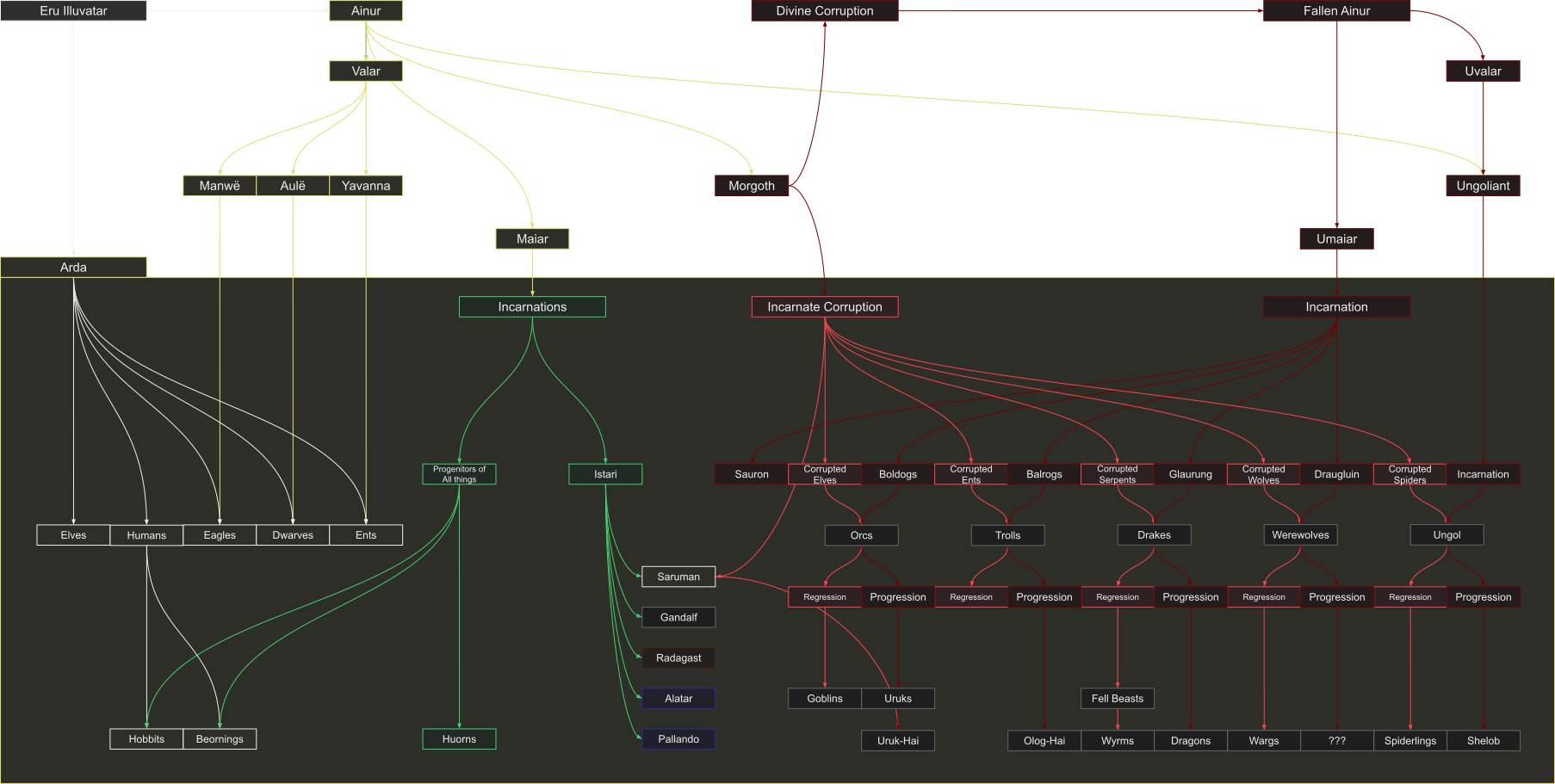
However, prior to his fall, Morgoth's tests also gave him an understanding of how he could manipulate Eru's creations to his own designs, and in working to prevent regression, he did find his could progress his creations with careful selection. This charade of playing God with his "livestock" was a closely guarded secret that would eventually be discovered by his closest servant, Sauron, and later Saruman who was corrupted by Sauron's influence. All three would utilize at one time or another selective breeding to strengthen their creations according to each master's will and to address specific weaknesses or failings of a particular design, in a process I'll refer to Progression.
- In orcs, Progression first lead to larger, strong specimens, ones who were less and less adverse to sunlight, great orcs or uruks; later iterated upon by Saruman, by adding humans to the mix, to create the largest, strongest, most militant breed of orcs, the uruk-hai.
- In trolls, Progression was essential due to the competing natures of their ent and balrog heritage causing a deadly vulnerability to sunlight which turned them to stone, resulting in a wide variety of troll types, but most useful for battle were the massive, naturally armored, olog-hai.
- In drakes, Progression, as previously mentioned, with the additions of a few of Manwe's great eagles unlucky enough to be taken captive, and tests incorporating other creatures resulted in the terrorizing, fire and venom spitting, winged beasts of the skies, the dragons.
- In werewolves, it is unknown what Progression may have produced, if any. Any records of which are lost to time.
- In ungol, Progression ungol was never truly explored due to Morgoth and Ungoliant betraying one another, however, the greatest of Ungoliant's offspring was a wickedly clever giant ungol spider called Shelob, who might have hidden powers from her uvalar heritage, possibly with the ability to rival incarnate Maiar, save for her insatiable hunger becoming her single most all-consuming drive.
Critically, neither Morgoth nor Sauron predicted an unforeseen side effect which arose from incorporating the spark of Eru's Flame Imperishable into their bastardizations, which planted the seeds of their undoing from the very start. That spark, likely through Eru's own cunning, introduced freedom of will, even in the most twisted of the Dark Lords' creations. But that is a topic for another time and another fan-canon theory essay.
Thus was the origin of many of the most prominent and long lasting races of Middle Earth. I am sure there are gaps in my theory, parts of where it contradicts Tolkien, sometimes intentionally sometimes not. But with the goal of creating a framework to answer many of my own personal questions and qualms where there was mixed possibilities, I believe this was a relatively successful attempt.
However, there were gaps that I wished to fill in relation to the extra-canon Middle Earth: Shadow of Mordor and Middle Earth: Shadow of War video games. Within those games, you run into a number of entities and creatures that have vague explanations for their existence at best.
For example, in the SOW, the player character Talion runs into what I can only describe as a spirit of the forest, an entity that looks like a giant woman mixed with a tree, not enough to look like an ent-wife but something wholly new, which can also magically transform into foliage-built forms of other forest creatures, called Carnen. With the framework of my fan-canon theory, I was able to determine that this Carnen character is very likely an incarnated Maia.
My fan-canon theory also was able to explain the existence of other creatures from the games, such as the strange, deformed creatures that lurk under the surface of Mordor's land, the ghuls; well it just makes sense that ghuls would be what became of the oldest bloodlines of orcs; once scattered and driven deep underground into isolation, where Regression was able to corrupt so deeply, that what remained after countless generations was barely more than a putrefying mess of flesh and instinct.
So too explains the existence of the creatures from the game known as graugs; ancient bloodlines of trolls, escaped or abandoned by their master, hiding away from the wretched light that would turn them to stone, resulting in monstrous giants, grown to bloated and grotesque proportions, developing thicker, spiny hides to survive their greatest vulnerability, any semblance of intelligence lost to instinct and hunger.
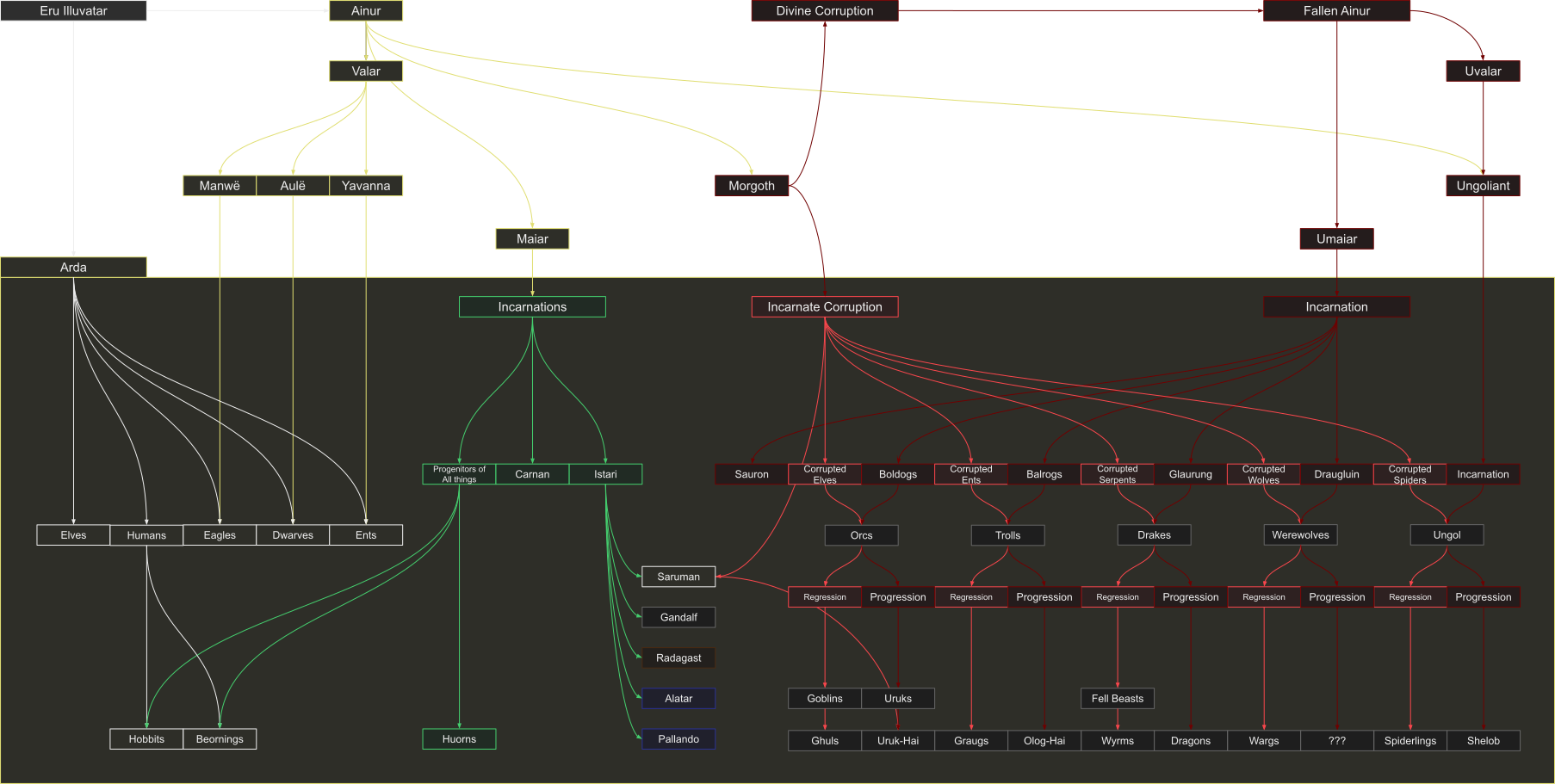
And here we reach the end, with only one final addition, an individual character from my own personal fanfiction, whose existence is only possible because of this giant convoluted theory, and that is one of Carnen's brood, a lesser forest spirit, originally introduced as Ammatar. That asshole is but a minor blip in the grand scheme of things, but it's nice to understand his origins.
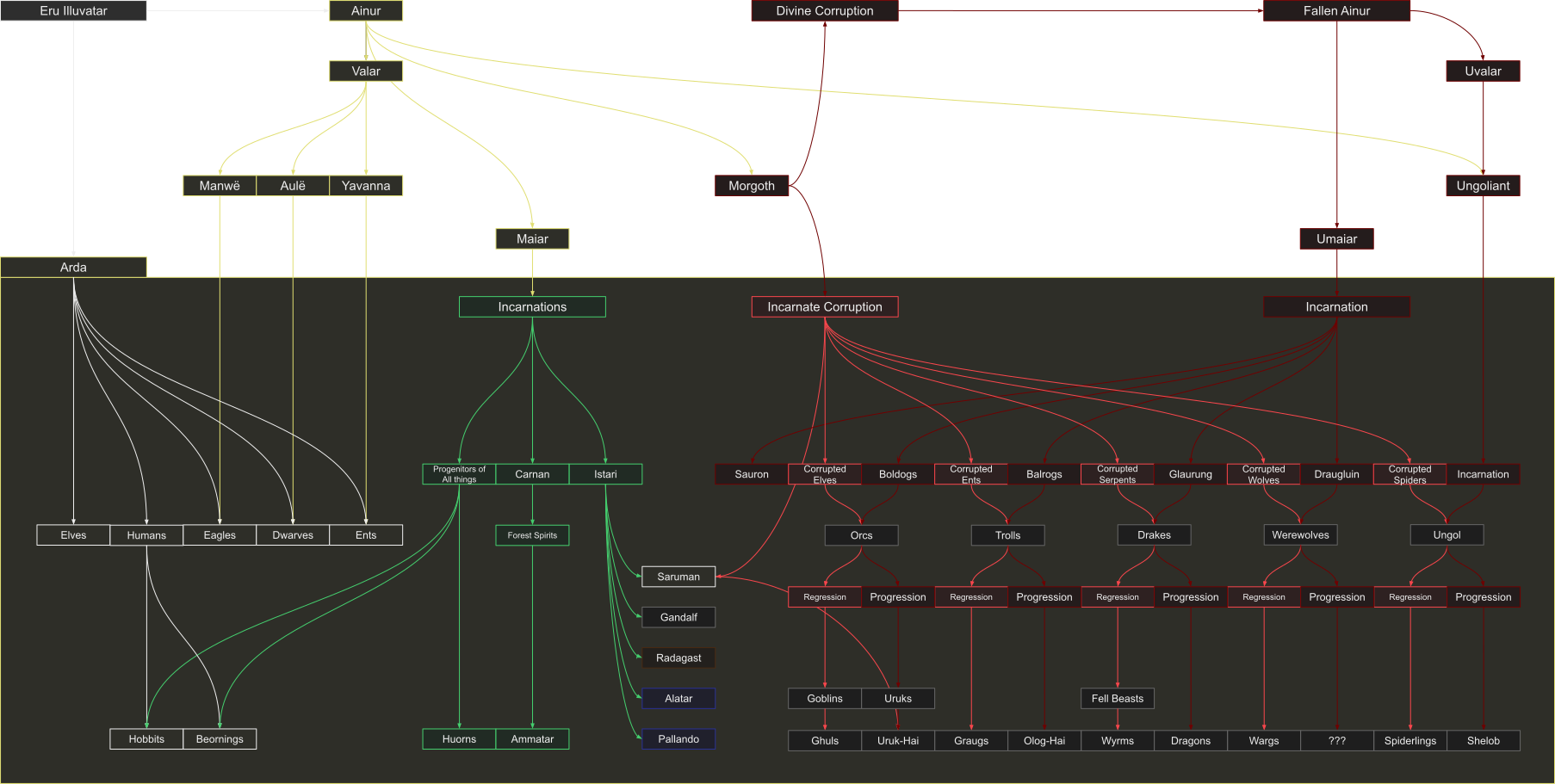
Anyways. If you stuck through my ramblings all the way to the end, I thank you! I hope this all made a modicum of sense, and perhaps might have sold any of you on elements of this theory. My personal favorite bit is the inclusion of ALL of Tolkien's theories of the origins of orcs: constructs made of mud and slime, corrupted elves and men, fallen maiar, sentient creatures; these concepts existing in tandem just makes so much sense when you consider that Morgoth was going against Eru and had to find ways around the limitations of not actually being able to create life himself, only stealing what already exists.
Let me know your thoughts! Did anything stand out to you? Do you agree/disagree? Do you have anything to add that I may have overlooked? I'd love to hear what you think!